Diagnosis: The Anatomy of Survival and Piecing Together a Broken Puzzle
1
The Final Piece of the Puzzle
2
The "God Mode" Illusion and the Desire for Absolute Shutdown
3
The War for Blood and the Paradox of a "Healthy Body"
4
A Broken Thermostat and Hormonal Bankruptcy
5
A Lost Future and the Night as the Only Refuge
6
Laying Down the Weapon
7
Summary of Symptoms (The Biological Picture of Overload)
April 22, 2026
The Final Piece of the Puzzle
In the first part of this series, I described my chase for (im)perfection and how the mask I built became my own prison. Subsequently, I had to admit that the paralyzing weight under which I lie is actually the second arrow with which I constantly hurt myself. And even though I revealed how my life on credit turned my morning performance into a daily emotional bankruptcy and exhaustion, the deepest, connecting meaning still eluded me.Because when one looks at a single, isolated puzzle piece, it makes no sense. You only see a jumble of colors and shapes that don't fit together. For many years, this is exactly how I looked at my own life.I saw only isolated, terrifying symptoms of my inability to live. I watched myself lose the ability to function normally, to eat, sleep, and work. Today, having finally found the key to it all, those pieces have ruthlessly fallen into place. Suddenly, it's not a coincidence. It is a perfect, terrifyingly precise picture of a machine that decided to sacrifice everything, just to keep me alive.This is my diagnosis. The anatomy of my life under threat.
The "God Mode" Illusion and the Desire for Absolute Shutdown
For a long time, I didn't understand why my absolute physical rock bottom was my favorite state. My highest quality training was always on an empty stomach, even if it was several hours after waking up. The greatest, euphoric state – my false peak – came after a long fast, followed by heavy strength training fueled by pre-workout, and topped off with a dose of nicotine from a vape during the walk back from training.I loved that state of a pounding heart, lethargy, and hot flashes. The extreme dose of nicotine that brought me to the verge of passing out made me feel incredibly good. Because it exactly simulated the feeling of destruction that I previously achieved under a heavy barbell. Today I know it wasn't a passion for sports. I was looking for an anesthetic.My mind, crushed by the loss of identity, couldn't find silence. Extreme physical shock and chemical intervention allowed me not to feel for a while. They forced my nervous system to produce such a massive amount of adrenaline and endorphins that it drowned out the quiet, inner emptiness. It was a pure behavioral addiction to the emergency brake.
People can be pathologically addicted to things other than drugs – for example, gambling, eating, shopping, working, and even the internet. When a person begins to engage in one of these activities compulsively and continuously, we begin to speak of a behavioral addiction, even though this condition may not exhibit the same neurological characteristics as a drug addiction.
QuoteTranslated— Nolen-Hoeksema, Fredrickson, Loftus • s. 428[1]
The War for Blood and the Paradox of a "Healthy Body"
I used to eat anything, from morning to evening, didn't care about calories, and functioned with a clear mind. In recent years, however, food became my greatest enemy. I solved the inability to eat normally by constantly delaying the first meal.The irony was that the more I tried to eat "as healthily as possible", the worse I felt. I believed in the motto "a healthy mind in a healthy body," but my effort only widened the abyss. My brain believed I was at war and got stuck in a state of chronic sympathicotonia. When I finally ate lunch after my fasted morning performance, my system couldn't send blood to my stomach because it was panickingly keeping it in my muscles for the impending "fight."The result was total, paralyzing apathy and inaction.
A common reaction to frustration is aggression, but an equally common reaction is withdrawing into oneself and apathy. If stressful conditions persist and the individual cannot cope with them, apathy sometimes develops into depression. The theory of learned helplessness explains how the experience of unpleasant and uncontrollable events can lead to apathy and depression.
QuoteTranslated— Nolen-Hoeksema, Fredrickson, Loftus • s. 594[1]My vagus nerve (Nervus Vagus) disconnected me hard, to prevent toxic fermentation of food in an under-perfused stomach. Physical, manual work suddenly became impossible for me. I fell from a white world straight into a black abyss. That's why I could only experience that magical state of flow and manage at least computer work solely on an empty stomach.
A Broken Thermostat and Hormonal Bankruptcy
I hit a dead end in the gym. Over the last 5 years, I haven't progressed in strength at all; on the contrary, I used to lift heavier weights. Fat began to accumulate disproportionately on my stomach, while my arms remained shredded. My hair started falling out, which I eventually gave up on and shaved my head completely.I feared insulin resistance, but my insulin was fine. My testosterone, however, was at rock bottom (13 nmol/l). Today I know it wasn't bad genetics, but a massive adaptation disorder. In a time of biological warfare, building muscle and reproduction are a luxury. The body applied the Law of Survival: it shut down testosterone production and redirected all energy to the creation of the stress hormone cortisol, which locked fat on my stomach to protect vital organs.
Repeated or prolonged exhaustion of physiological resources in a situation where the organism is exposed to the long-term effects of stressors to which it cannot respond by fleeing or attacking is the cause of a wide range of physiological disorders, which he called adaptation disorders.
QuoteTranslated— Nolen-Hoeksema, Fredrickson, Loftus • s. 597[1]On top of this, a broken thermostat threw me between two extremes. In the gym, I poured sweat, my palms and soles sweating – a pure evolutionary adrenaline response so I wouldn't "slip while running away." At home, at rest, my hands and feet were icy cold. The body, in survival mode, panicked and withdrew blood from the extremities - vasoconstriction, to keep the heat near the heart.
The sympathetic system also stimulates the adrenal medulla, which secretes the hormones adrenaline and noradrenaline into the bloodstream.
QuoteTranslated— Nolen-Hoeksema, Fredrickson, Loftus • s. 595[1]
A Lost Future and the Night as the Only Refuge
When the food-induced apathy hit in the afternoon, I also lost the desire to go to sleep. Sleep brought no relief; it was just a loss of hope. I had no reason to end the day because I didn't believe tomorrow would be better.
And when I did fall asleep, I often woke up in the middle of the night, bathed in sweat, ravenously hungry, and with a false sense of immense energy that forced me to wander aimlessly through the empty, dark city with melancholic music in my ears. This state of utter alienation precisely matches the psychological footprint of deep trauma.
The first group of symptoms [after traumatic stress] is manifested by a profound detachment from everyday life. Affected individuals report that they are completely numb, as if lacking any emotional responses. They feel alienated and feel they cannot connect even with their closest relatives and friends. They also lose interest in activities they previously engaged in, and can sit and stare blankly for hours.
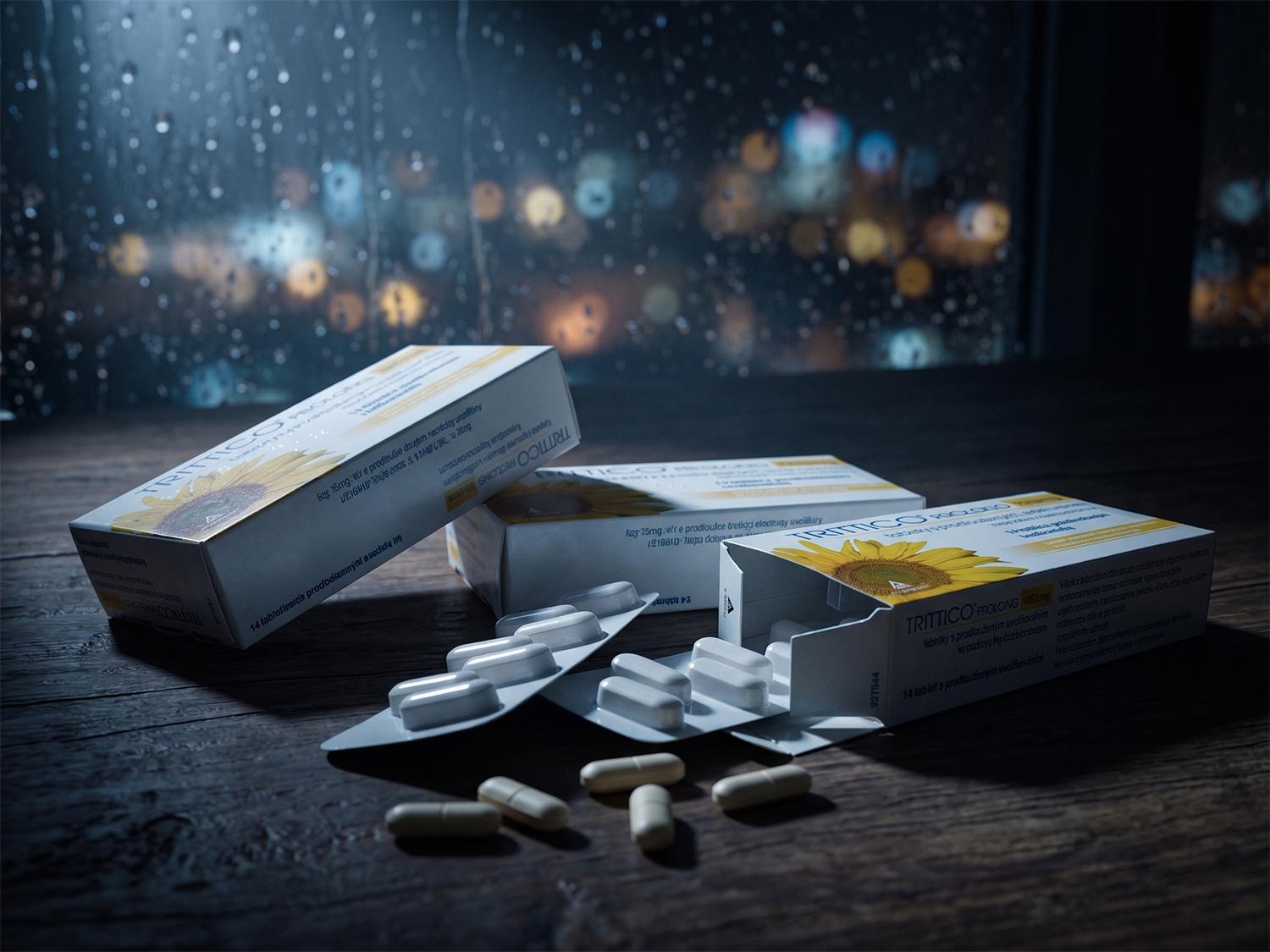
QuoteTranslated— Nolen-Hoeksema, Fredrickson, Loftus • s. 589[1]It wasn't an excess of strength. My liver had simply depleted its sugar reserves, and the brain became afraid of shutting down. A massive dose of adrenaline flooded into my blood - nocturnal hypoglycemia, jerking me from sleep with a hot flash. Trittico, which recently finally helped me sleep through the night, did not fix my system. It merely mercifully blocked those adrenaline receptors so I could survive.No wonder I never planned for the future, a career, or investments. I believed it would come naturally, "when I fix my imperfection". But Abraham Maslow defined it relentlessly clearly:
He hypothesized in particular that there is a hierarchy of needs, beginning with basic biological needs [...] If a person can only barely secure food and safety, they will focus all their strength on satisfying precisely these needs, and higher motivations will lose their significance.
QuoteTranslated— Nolen-Hoeksema, Fredrickson, Loftus • s. 565[1]When your biology believes you will die in a predator's jaws tomorrow, you don't plan for retirement. My passive desire for it to "all just end", and my absence of fear of death were not an expression of my courage. It was just the silent cry of my exhausted organism for relief.
Laying Down the Weapon
Today, my only and deepest desire is to live and eat like a normal person. I don't want to have a panic fear of food. I want to enjoy life and not constantly feel that my own body is against me.Looking at the assembled puzzle, I finally understood one crucial thing. My body never betrayed me. I wasn't broken. For the entire 5 years, my organism kept me alive incredibly loyally and protected me from my own destructive expectations.The path to healing is not through trying to "overpower" it again and prove my strength. For the parasympathetic nervous system to turn on so I can digest, sleep, and live, I don't need tougher discipline. I need to definitively put down that second arrow. I must finally prove to my body in practice that the long war is truly over. To prove that we are finally safe.
Summary of Symptoms (The Biological Picture of Overload)
1
Morning fasted 'God Mode' followed by afternoon total apathy after the first meal.
2
The paradox of a healthy diet: The inability to digest even quality food without paralyzing fatigue (vagus nerve shutdown).